Ginger — Botanical Overview, Traditional Context, and Research Notes
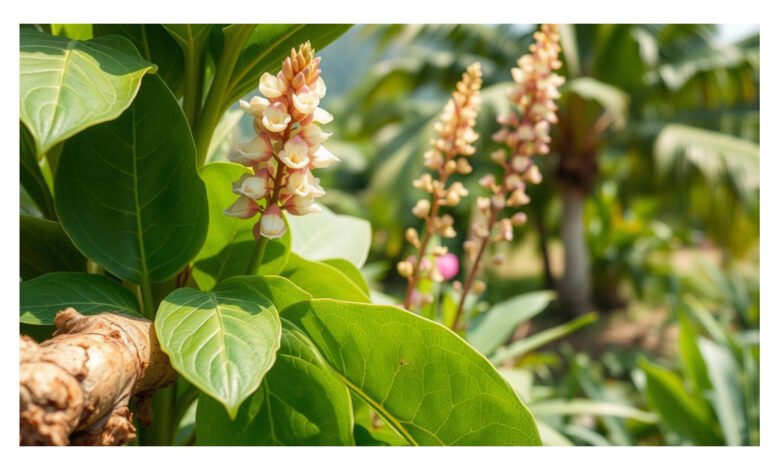
Have we overlooked the ginger plant because we often grab it from the grocery shelf? This question makes us think about ginger in a new light. It encourages us to see it as a subject for deep study, not just a kitchen staple.
We aim to show the ginger root and plant as subjects for scientific study and practical advice. Our method is based on solid evidence and doesn’t promote any treatments. We guide readers to primary sources like PubMed for detailed studies and WebMD for easy-to-understand summaries.
In the next sections, we’ll mix botanical descriptions with insights on research methods. We’ll cover everything from plant structure to chemistry and how to find reliable studies. Our goal is to help you understand and evaluate claims about ginger’s nutrition. We want you to choose the right materials for study while keeping science honest and reliable.
Key Takeaways
- We treat ginger as both a culinary ingredient and a research subject—connecting ginger root familiarity with rigorous botanical study.
- Primary literature searches on PubMed are essential for up-to-date taxonomic and phytochemical information.
- WebMD and similar sources help translate scientific results for public context but are not substitutes for primary studies.
- The article emphasizes evidence-focused, non-therapeutic discussion of ginger nutrition and constituent profiling.
- Subsequent sections will guide researchers on specimen selection, reporting standards, and analytical approaches.
Botanical classification and taxonomic history
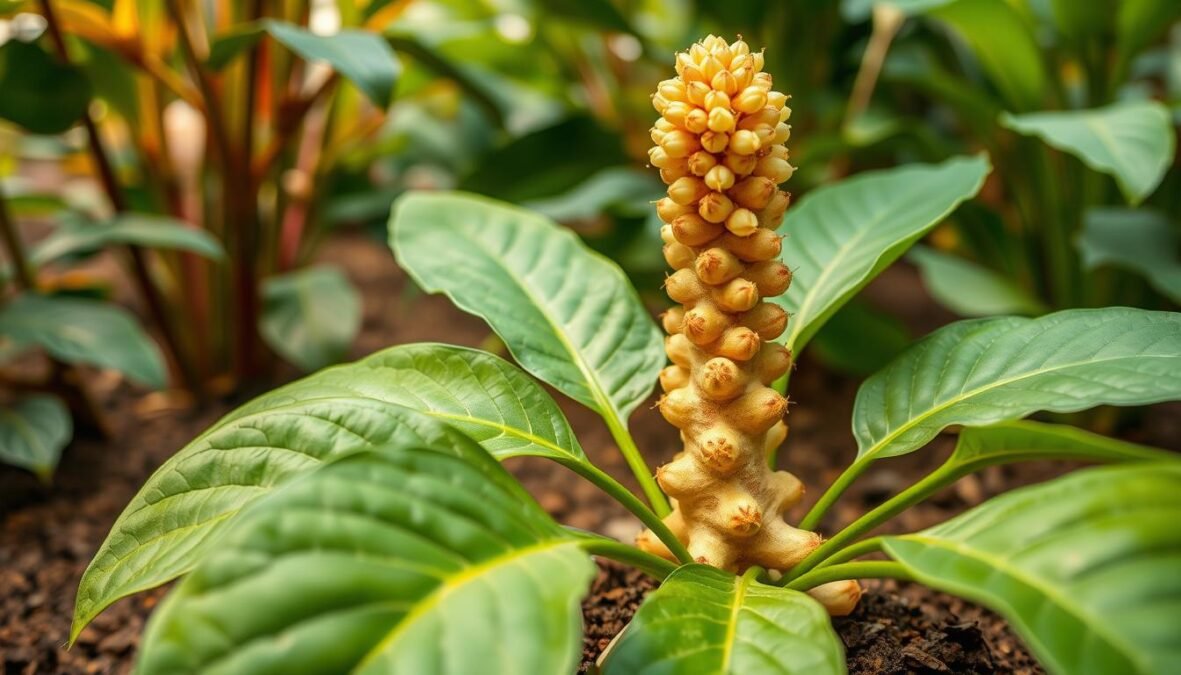
We start by looking at how botanists have classified the ginger plant. This includes accepted names, synonyms, and its place in the Zingiberaceae family. It’s useful for those interested in plant taxonomy to know where to find accurate names.
Family placement and scientific name
The ginger plant is in the Zingiberaceae family, known for its aromatic rhizomes. The scientific name is widely accepted in major floras and databases. For more information, check IPNI and Kew’s listings for author citations and publication details.
Looking into primary literature on ginger root, you’ll find phylogenetic studies in PubMed. These studies confirm the ginger plant’s family using molecular markers.
Synonyms and historical taxonomy shifts
Over time, different names have been used for the ginger plant. This is because botanists described specimens from various places. To find the current name, check The Plant List and Index Kewensis for synonyms.
Related genera and phylogenetic context
Molecular phylogenies show how Zingiber, Alpinia, Curcuma, and others are related. These studies use DNA markers to find clades within the family. They help explain why some plants look similar and guide in identifying related species.
For accurate identification, use both morphological keys and DNA studies. Find these in PubMed and major taxonomic repositories.
Morphology of the rhizome and aerial structures
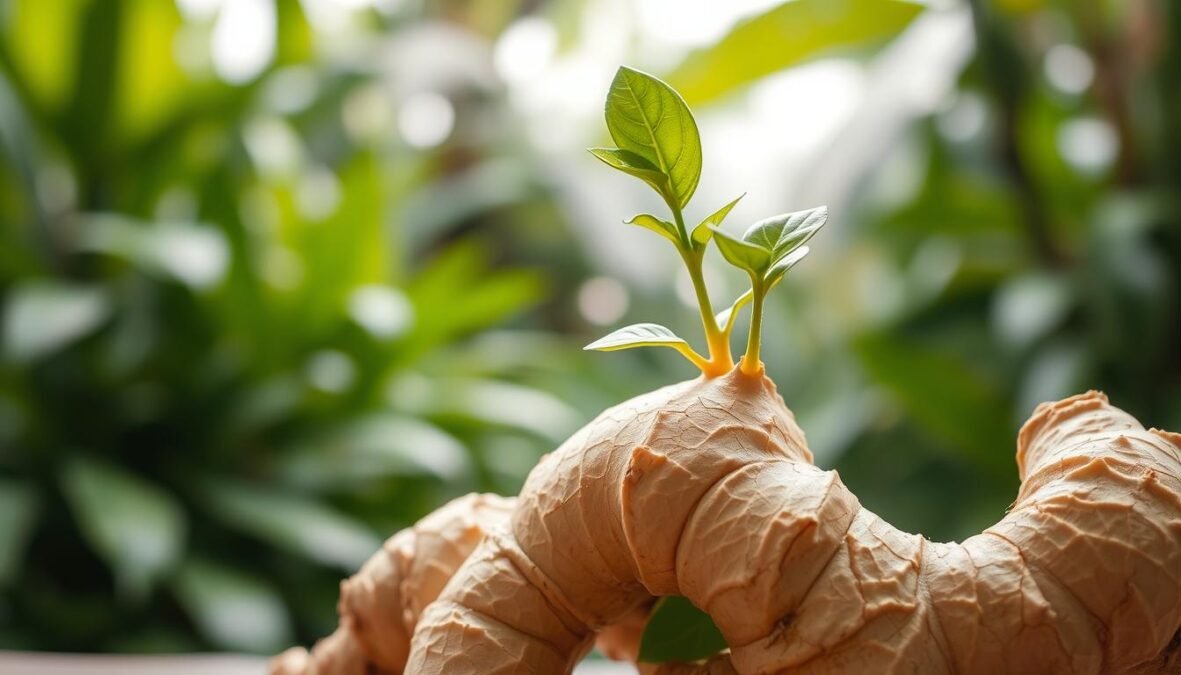
We explore the ginger plant’s visible and hidden parts. We look at form, scale, and growth patterns. This helps you recognize traits in gardens, markets, or research plots.
Rhizome anatomy and growth patterns
The rhizome is a horizontal, fleshy axis. It has alternating nodes and internodes. Young segments are a few centimeters, while mature clumps can be over 10 centimeters across.
Storage parenchyma makes the ginger root bulky and pale. Vascular bundles form transport strands scattered throughout. Buds in leaf axils start new shoots or daughter rhizomes.
Growth happens as buds are activated one after another. This creates the familiar knobbly mass used in kitchens and studies.
Leaf, stem, and inflorescence morphology
The “stem” is actually a pseudostem made of layered leaf sheaths. Leaf blades are narrow and lanceolate, usually 20–40 centimeters long. Leaves are alternate, and sheaths wrap tightly to form a sturdy habit.
Inflorescences emerge near the base or from nodes on short shoots. Flower spikes sit above the pseudostem on a stalk. Bracts protect developing flowers. Floral display is often shorter than the foliage.
Reproductive structures and seed characteristics
Flowers have a tubular corolla with three petals and a single functional stamen. This aligns with Zingiberaceae patterns. Pollen grains are small, measured in micrometers in palynological studies.
Fruits are capsules in most cases. Many cultivated lines produce few viable seeds. Seed size is small and irregular. Germination rates vary widely, making vegetative propagation common.
| Feature | Typical Measurements | Relevance to use |
|---|---|---|
| Rhizome diameter | 2–12 cm | Determines edible yield and storage capacity for ginger root |
| Internode length | 0.5–3 cm | Reflects growth rhythm and ease of division for propagation |
| Leaf blade length | 10–40 cm | Influences photosynthetic area that supports rhizome reserves |
| Inflorescence height | 5–25 cm | Impacts visibility of flowers for pollination studies |
| Seed size | 1–3 mm | Small seeds often limit sexual recruitment; growers rely on vegetative spread |
| Storage parenchyma proportion | High percentage of rhizome cross-section | Key to ginger nutrition and commercial value of root material |
Native range, habitat preferences, and ecology
Ginger comes from tropical Asia, with Southeast Asia being a key area of diversity. Studies on PubMed show that ginger was domesticated in places like northeastern India, Myanmar, and China. This tells us how ginger spread with humans.
Geographic origin and centers of diversity
The ginger family thrives in the humid tropics of South and Southeast Asia. Wild relatives live in forest understories from Assam to Yunnan and Indochina. Herbarium collections and molecular studies agree that cultivated ginger came from local wild populations, not a single place.
Soil, climate, and microhabitat requirements
Ginger loves warm, humid places with temperatures between 18°C and 30°C. It needs 1,200–3,000 mm of rain a year, but irrigation helps it grow elsewhere. It prefers well-drained loamy soils with good organic matter and a pH close to neutral.
Ginger does well in shade. It grows well under trees or in agroforestry systems. This helps it get filtered light and less water loss. It also needs steady moisture, leaf litter, and moderate soil aeration for healthy growth.
Ecological interactions and role in plant communities
Bees and flies visit ginger flowers, helping with genetic exchange. The rhizome is home to many soil microbes, improving nutrient access and resilience. In mixed crops, ginger can fight weeds with its dense canopy and leaf litter.
Outside its native range, ginger has naturalized in some tropical islands and coastal areas. It can be invasive in disturbed habitats with similar climate and soil. Monitoring is key to prevent its spread.
| Ecological Factor | Typical Range or Trait | Implication for cultivation and ginger uses |
|---|---|---|
| Temperature | 18–30°C mean annual | Supports year-round growth in tropics; storage of rhizomes favored by cooler, dry conditions |
| Rainfall | 1,200–3,000 mm annually | High moisture supports rhizome expansion; irrigation can substitute in drier areas |
| Soil | Loamy, well-drained, pH 5.5–7.5 | Good organic matter improves yield and quality for culinary and medicinal ginger uses |
| Light | Partial shade to filtered sun | Understory cultivation reduces stress and supports steady rhizome growth |
| Biotic interactions | Pollinators: bees, flies; soil microbiota diversity | Pollination supports diversity; beneficial microbes improve nutrient uptake and resilience |
| Naturalization risk | Localized in tropical islands and disturbed sites | Requires monitoring where introduced to prevent spread beyond cultivation |
Domestication, cultivation history, and traditional contexts
Ginger’s journey from wild rhizome to global crop is well-documented. Archaeological finds and historical texts reveal its early use in South and Southeast Asia. Trade lists, botanical descriptions, and culinary notes all mention ginger.
Archaeobotanical evidence, like charred rhizome fragments and phytoliths, confirms its domestic use. These finds also show ginger’s movement along ancient trade routes.
Archaeobotanical and historical mentions in trade
Excavations in the Indian subcontinent and southern China uncovered ginger remains from the first millennium BCE. Classical authors like Pliny and Chinese court documents talked about its use in preserved foods and medicines.
Maritime trade records from the Arabian Sea and the South China Sea list ginger alongside pepper and cinnamon. They highlight its value in long-distance commerce.
Traditional cultivation practices across regions
Farmers in tropical Asia prepared beds with loose, well-drained soil. They planted pieces of mature rhizome at shallow depth. Propagation used seed pieces, not seeds, so preserving healthy mother rhizomes was key.
Planting was timed with the onset of rains, and harvesting happened when leaves yellowed. These practices were recorded in ethnobotanical surveys from India, Indonesia, and Nigeria.
Smallholder techniques included mulching and shade management to protect young shoots. Traditional irrigation and staggered planting ensured steady supplies for local markets and household use.
Cultural and economic roles in historical trade networks
Ginger played many roles in regional economies. It was a valued trade commodity, a household preservative, and an ingredient in local recipes. Merchants from ports like Calicut and Guangzhou listed ginger in cargo manifests, showing steady demand in West Asian and European markets.
Genetic studies suggest selection for plumper rhizomes and milder fiber content followed these trade-driven preferences. Local cuisines adapted product traits into signature preparations—pickles, syrups, and spiced sauces. This shows how cultivation and culinary practice evolved together.
Contemporary accounts and agricultural records show how shifts in market access reshaped cultivation intensity and the geographic spread of varieties.
| Aspect | Evidence Source | Historical Impact |
|---|---|---|
| Early archaeobotanical finds | Charred rhizome fragments, phytolith analysis | Confirmed prehistoric use; local domestication centers identified |
| Classical textual mentions | Roman, Chinese, Arabic trade records | Raised market value; spurred long-distance trade networks |
| Traditional agronomy | Ethnobotanical surveys from India, Indonesia, West Africa | Shaped planting cycles and propagation practices still used today |
| Trade-driven selection | Historical market reports and genetic analyses | Favored traits for transportability and culinary uses; influenced varieties |
| Cultural integration | Cookbooks and household records | Embedded ginger in regional ginger recipes and foodways |
Propagation methods and agronomic practices
We share practical ways to grow the ginger plant and manage small plots. Our advice comes from field tests and horticultural trials. It covers how to use rhizomes for planting, set up soil, and manage pests for healthy growth.
For planting, we use mature rhizome pieces. Each piece should have at least one healthy bud and weigh 25–50 grams. This helps them grow faster. Treat the cut ends with a mild fungicide or let them heal for 24–48 hours in a shaded area to prevent rot.
Using nursery trays helps when seasons are short. Plant rhizome pieces in trays with loose mix until shoots are 5–8 cm long. This method reduces losses and makes transplanting easier. It’s good for gardeners and those making ginger supplements.
Soil preparation, planting density, and cropping cycles
Soil should be deep, loose, and drain well. Add compost and coarse sand to heavy clays. Aim for a pH of 6.0 to 6.8 for best nutrient use.
Plant spacing depends on your goals. For fresh rhizomes, space plants 25–30 cm apart and rows 30–35 cm apart. For processing, space closer to increase yield. Mulch with straw or black fabric to keep moisture in and weeds out.
Crops take 8–10 months in the tropics, 4–5 months for baby ginger. Rotate with non-host crops to break disease cycles and keep soil fertile.
Pest and disease considerations in cultivation
Fungal pathogens like Pythium and Fusarium cause rot in wet soils. Use raised beds, avoid too much water, and choose disease-free material. Solarization and crop rotation help too.
Nematodes can stunt growth and lower quality. Use resistant plants, organic amendments like neem cake, and biological controls like Paecilomyces lilacinus.
Watch for shoot borers and nematophagous thrips. Use sticky traps, neem sprays, and Bacillus thuringiensis for control. Keep the field clean to stop disease spread.
Keep records of each lot’s cultivar and propagation. This helps link field practices to product quality, whether selling fresh, to processors, or for supplements.
Post-harvest handling, storage, and processing
We focus on steps that protect aroma, texture, and phytochemical integrity after harvest. Proper handling reduces bruising, microbial growth, and loss of pungent compounds. This is important for both kitchen uses and commercial supply chains.
Check if the skin is firm and the shoots are yellowing. Rhizomes are mature when the skin is firm and the shoots start to yellow. Harvest before heavy rains to avoid soil contamination.
Use forked spades for manual lifting to avoid damage. For large fields, use shallow mechanical lifters and sort immediately. This lowers breakage rates. Minimize time between lifting and cleaning to prevent desiccation.
Drying, curing, and storage methods
Start with gentle washing to remove soil; avoid soaking for too long. Cure at 25–30°C with moderate humidity for 24–48 hours. This heals cuts and reduces microbial load.
For drying, use sun-drying if possible. Solar dryers control temperature. Dehydrators or low-temperature ovens at 50–60°C dry slices evenly. High heat can degrade key compounds.
Store fresh ginger at 12–15°C with 85–90% humidity. This slows sprouting and keeps it crisp. Vacuum packaging or modified-atmosphere storage extends shelf life for retail ginger root.
Standardization for quality and commercial grading
Quality schemes use size, skin condition, and internal defects. Commodity grades classify by diameter, weight, and blemished units. Laboratory grading adds moisture content and microbial counts.
Regularly test for moisture (10–12% for dried), total volatile oils, and HPLC fingerprinting. Clear labeling for cultivar and origin supports traceability and consumer trust.
| Handling step | Best practice | Why it matters |
|---|---|---|
| Harvest timing | Harvest at firm skin and shoot yellowing; avoid wet fields | Reduces bruising and soil contamination that lower quality |
| Lifting technique | Manual lifting or shallow mechanical lifters; immediate sorting | Prevents rhizome breakage and limits post-harvest rot |
| Initial cleaning | Gentle brushing and brief rinsing; avoid prolonged soaking | Removes soil while limiting water uptake that promotes microbes |
| Curing | 24–48 h at 25–30°C, moderate humidity | Heals cuts and reduces surface microbial load |
| Drying | Solar dryer or dehydrator at 50–60°C for slices; controlled sun drying where clean | Preserves gingerol profile for spice use and ginger tea |
| Storage (fresh) | 12–15°C, 85–90% RH; vacuum or MAP for longer storage | Slows sprouting and moisture loss; maintains quality for ginger recipes |
| Quality checks | Moisture, microbial load, volatile oil or HPLC profiling | Ensures consistency for commercial grading and food safety |
Processors and home users should document each lot. Include date, location, cultivar, and handling steps. Good post-harvest practice keeps ginger root flavorful for cooking and makes ginger tea safe and aromatic.
Phytochemistry and major active compounds
We explore the main chemical groups in ginger. These groups affect its smell, taste, and health benefits. We provide a quick look at the phenolic compounds, volatile oils, and how their amounts vary in different samples. This info helps you make smart choices about ginger and its health perks.
Gingerol and related phenolic constituents
Gingerols, like 6-gingerol, are key non-volatile parts. Studies show their amounts in fresh and processed ginger. They can change into shogaols when heated, creating more pungency.
Volatile oils, terpenes, and aroma compounds
The essential oils in ginger are full of terpenes. These include zingiberene and camphene. Different drying methods and harvest times change the scent of fresh ginger.
Variation of constituents by cultivar, geography, and processing
Things like the ginger type, soil, and how it’s handled after picking affect its chemicals. Different drying and cooking methods also change the amounts of gingerols and terpenes. Where it’s grown and when it’s picked also play a role.
For those studying or making ginger products, it’s important to share details. Knowing the type, where it’s from, and how it’s processed helps understand its flavor and health benefits.
Analytical methods for constituent identification
We explain how to identify active molecules in ginger and its products like supplements. Analysts pick methods based on the type of compound they’re looking for. They also focus on sample preparation, using internal standards, and validating their results.
Reporting details like solvents, extraction temperatures, and instrument settings is key. This ensures results are consistent across different labs studying ginger root.
Chromatography techniques (HPLC, GC-MS) for profiling
HPLC with UV or tandem MS is often used for gingerol-related compounds. Methanol or aqueous methanol at specific temperatures are used for extraction. Analysts add an internal standard, create calibration curves, and report detection and quantitation limits.
For volatile compounds, GC-MS is used after solvent extraction or headspace-solid phase microextraction. Choosing the right column, temperature program, and mass spectral libraries is crucial for accurate identification. Common issues include thermal degradation of gingerol derivatives and carryover between runs.
Spectroscopic methods and metabolomics approaches
NMR and FTIR are useful for confirming structures and fingerprinting extracts. Untargeted metabolomics uses UHPLC-MS or GC-MS with multivariate statistics. It helps compare fresh ginger root and commercial supplements.
Quality controls, pooled samples, and blank runs are important in metabolomics. Reporting data normalization and statistical thresholds helps others understand the results.
Standard reference materials and quantitation protocols
Certified reference materials and in-house standards help reduce differences between labs. Validation should cover accuracy, precision, linearity, matrix effects, and stability for both ginger and supplements.
Calibration strategies may use external standards or isotope-labeled internal standards. Detailed validation supports regulatory compliance and builds confidence in reported compound levels in ginger supplements.
Quality control, adulteration risks, and safety observations
We look at how labs and makers keep ginger products safe. Good quality control means we can trust ginger uses and supplements. Studies help set standards for testing and sampling.
Common adulterants and detection strategies
Other rhizomes and starches are often used to fake ginger. This changes what we expect in food and supplements. It’s important for both cooking and supplements.
Tests like chromatography and DNA barcoding help spot fake ginger. These methods show if something is not what it seems. Using them together helps prove a product is real.
Contaminant monitoring (pesticides, heavy metals, microbes)
Tests look for pesticides and heavy metals in ginger. This is because these can be found in tropical areas. Special tests can find these at very low levels.
Heavy metals like lead and mercury are tested too. This is because different places have different soil. Tests for bacteria like E. coli are also important for safety.
Regulatory standards and labeling considerations in the United States
In the U.S., the FDA has rules for food and supplements. But it doesn’t check every ingredient. Makers must follow good practices and make sure products are safe.
Rules from groups like AOAC International help make sure products are what they say. Labels must be honest and tell us what’s in the product. This includes where the ginger comes from.
We suggest using tests that check for identity, safety, and strength. This helps keep consumers safe. It’s important for those who use ginger in cooking or take supplements.
Research methodologies used in botanical and phytochemical studies
We explain how to study plants and their compounds. This helps researchers do work that can be checked and repeated. We talk about getting plant materials, designing experiments, choosing models, and combining evidence for ginger, the ginger plant, and ginger supplements.
Experimental design for plant-derived compound studies
First, we look at where the plants come from. We note the type of plant, where it was grown, when it was picked, and how it was stored. Having a plant sample in a herbarium helps confirm what kind of plant it is.
It’s important to have controls and to repeat experiments. Use controls to compare results and make sure your sample size is big enough. Randomizing and blinding your study helps avoid bias. Also, decide what you want to measure before you start.
In vitro, in vivo, and ex vivo model considerations
Choose the right model for your question. Use cell lines for basic research, tissues for organ studies, and animals for full-body effects. For animal studies, give details about the animals, like their age and where they were kept.
Make sure the doses you use are realistic for ginger supplements. Say how you got the plant extracts and what was in them. Also, talk about the limits of each model and don’t overread the results.
Systematic reviews, meta-analyses, and evidence mapping approaches
For reviews, have a plan and clear rules for what studies to include. Search widely, like in PubMed. Use special forms to gather data and check how reliable the studies are.
Evidence maps show where studies are missing. Look at the basics of each study, like how it was done and what it found. Show your results clearly and think about updating your review as new studies come out.
Trends in scientific publication and data sources
We keep up with ginger research by using trusted sources and keeping our data fresh. A good search plan helps us find studies on ginger’s health, growth, chemistry, and recipes. We’ll share steps for searching, finding new topics, and updating data.
How to use bibliographic databases like PubMed for literature searches
Start with PubMed for biomedical and life science papers—it has over 39 million records. Use MeSH headings to narrow your search. For example, search for “Zingiber officinale” with terms like “phytochemistry” or “clinical trials”. Use Boolean operators to refine your search, and filters for species, study type, and dates.
Set up alerts for your searches so new papers arrive in your inbox. For topics that interest the public, use WebMD for insights. But remember, clinical studies are the best evidence.
Identifying high-activity records and emerging topics
Look for papers that get a lot of citations quickly—they often signal new areas of research. Analyze abstracts for patterns; terms like “gingerol” or “antiemetic” might show up a lot. New methods like next-generation sequencing can also point to trends.
Watch for conference abstracts and special journal issues. They often hint at upcoming research. For public interest, see how recipes and lifestyle articles mention ginger to gauge demand.
Data curation and staying current with preprints and conference reports
Build a simple data pipeline: export search results, tag them, and keep a spreadsheet. Regularly check for duplicates and update records with new information.
Keep an eye on preprint servers like bioRxiv and medRxiv for early findings. Also, follow conference reports from botanical and phytochemistry societies. Make sure to track changes in preprints after peer review.
| Resource | Primary use | Practical tip |
|---|---|---|
| PubMed | Comprehensive biomedical literature searches | Use MeSH, Boolean operators, species filters, and citation tracking |
| bioRxiv / medRxiv | Early access to preprints and methods | Note preprint versioning and follow later peer-reviewed versions |
| Conference proceedings | Emerging data and pilot studies | Capture abstracts and contact presenters for datasets when needed |
| WebMD | Public interest and consumer-facing context | Use for topic signals, not primary evidence |
| Reference manager (EndNote, Zotero) | Organize citations and export datasets | Standardize tags for ginger, ginger health benefits, and ginger recipes |
We suggest checking your sources regularly. Set up weekly alerts for fast topics and monthly updates for big datasets. This keeps your searches sharp, spots new trends, and helps you make sense of ginger research.
Traditional names, ethnobotanical notes, and historical citations
We explore how ginger is named in different cultures. This helps us see the connection between food and plants. Local names tell us about trade, migration, and cooking traditions. We focus on historical uses and names, without making medical claims.
Common vernacular names across regions
In Asian markets, you’ll hear “ginger” and other names like shōga in Japanese. Adrak in Hindi and jahe in Indonesian are also common. English traders used “ginger” for both fresh and dried roots, leading to confusion in old records.
Public guides and ethnobotanical books list many names for ginger. Spanish jengibre, Arabic zanjabil, and Chinese (shēngjiāng) are examples. Each name is linked to local cooking and recipes.
Documented historical mentions in trade and literature
Old trade records from the Mediterranean and Indian Ocean mention ginger as a luxury. Medieval Europe’s spice lists and port records show ginger’s role in trade.
Ethnobotanical journals in PubMed link historical names to modern plant identification. This helps researchers verify plant names with voucher specimens.
Limitations of ethnobotanical data for scientific inference
Vernacular names can be confusing. One name might mean different plants, and one plant can have many names. This makes it hard to draw conclusions without voucher specimens.
Cultural changes affect recipes and uses of ginger over time. Historical mentions need careful interpretation. We suggest using both language and specimen evidence to avoid mistakes.
| Region | Common Name | Typical Context | Notes for Researchers |
|---|---|---|---|
| South Asia | Adrak | Fresh rhizome in curries, pickles, and ginger recipes for beverages | Collect voucher specimens and document cultivar; local markets may mix fresh and dried forms |
| East Asia | Shōga / (shēngjiāng) | Pickled accompaniments, stir-fries, and sliced forms used in traditional ginger recipes | Record processing method — fresh versus pickled — since chemistry differs |
| Southeast Asia | Jahe | Flavoring in sauces, soups, and local ginger recipes like herbal drinks | Document local cultivar names; trade names may obscure botanical identity |
| Middle East | Zanjabil | Dried spice in confectionery and historical trade listings | Archive records often list dried root without botanical confirmation; seek herbarium links |
| Europe (historical) | Ginger | Listed in medieval spice inventories and culinary manuscripts with ginger recipes | Cross-reference manuscript terms with port registries and specimen records when possible |
| Americas | Ginger | Introduced via trade; appears in colonial cookbooks and modern ginger recipes | Track introduction pathways and cultivar provenance in agricultural records |
Use in food systems and non-therapeutic applications
Ginger is a key ingredient in many kitchens and food industries. It’s prized for its aroma, texture, and ability to preserve food. We look at how ginger is used in different ways, from fresh to dried and processed.
Role in culinary traditions and processing into food ingredients
Chefs and home cooks use ginger in many forms. They slice it thinly, make it into pastes, or powder it. Small-scale processors turn fresh ginger into consistent ingredients for recipes.
Use as a flavoring agent in beverages and preserved goods
Beverage makers add ginger for a zesty taste in drinks. They use dried root and extracts to ensure flavor consistency. Preserved foods like pickles and chutneys use ginger to add spice and texture.
Industrial applications unrelated to physiological claims
Flavor and fragrance companies create ginger extracts for food products. They use techniques to keep the flavor during processing. This ensures the taste is consistent without making health claims.
Ginger is used in many ways in food, like balancing flavors and adding warmth. We share these uses to help professionals and scientists in the food industry.
Ginger
We offer clear guidance on picking plant material and reporting methods for ginger research. Good documentation helps others repeat and compare studies. This makes research more reliable.
Guidance for researchers on selecting material and reporting
Choose trusted sources like certified nurseries or germplasm repositories. Record the plant’s botanical identification and any genetic confirmation. Also, note the collection location, harvest date, and processing steps.
Best practices for voucher specimens and herbarium deposition
Make voucher specimens from the same batch used in analysis. Include both vegetative and reproductive parts. Send vouchers to places like the New York Botanical Garden or Smithsonian Institution.
Keep duplicates for both the herbarium and your research group. Store ginger root and rhizome samples in conditions that prevent chemical changes.
Notes on cultivar identification and provenance reporting
Use keys and molecular markers to confirm the ginger’s identity. Describe how it was grown—soil, light, water, and fertilization. State if it was wild or cultivated and its condition at study time.
| Reporting element | Minimal details required | Recommended best practice |
|---|---|---|
| Source | Supplier name and lot ID | Accredited germplasm repository plus supplier certificate |
| Taxonomic ID | Accepted scientific name | Identification by taxonomist with voucher accession number |
| Genetic verification | Not required but noted if performed | DNA barcode or SNP profile with method citation |
| Provenance | Country and region | GPS coordinates, farm vs wild, cultivation history |
| Material state | Fresh or processed | Detailed processing steps and storage conditions for ginger root |
| Voucher deposition | Herbarium name and accession number | Duplicate vouchers and herbarium contact information |
Use PubMed-indexed study methodology sections as templates. Write methods clearly, listing each step for ginger plant material.
Conclusion
We’ve explored Ginger from its roots to how we use it today. We highlighted the importance of primary literature, like PubMed, for research. It helps us understand the ginger plant’s chemistry and methods used.
For those studying ginger, it’s crucial to choose the right materials and report where they come from. Using tested methods for analysis and documenting how ginger is grown and processed is key. This ensures results can be trusted and shared.
Our goal is to help you find reliable sources and conduct thorough research. By following these steps, studies on ginger will be more credible. This benefits both scientists and the community.