Turmeric — Botanical Overview, Traditional Context, and Research Notes
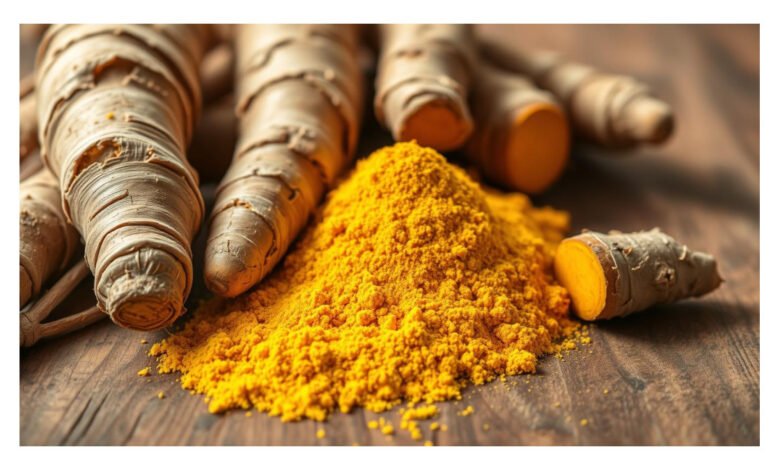
Could a common spice on your shelf — the dried, knobby rhizome of Curcuma longa — hold a story that spans 4,000 years of culture, craft, and laboratory study?
Turmeric is the dried rhizome of Curcuma longa. It’s a plant in the Zingiberaceae family, related to ginger. The rhizome is boiled, dried, and ground to make the bright yellow powder we know.
For about 4,000 years, turmeric has been used in South Asia. It’s used in food, rituals, and as a dye. The Latin name, terra merita, means “meritorious earth,” honoring the rhizome’s bright color and importance.
The turmeric plant grows about one meter tall. It has grass-like leaves and greenish-yellow flowers. The swollen rhizomes are harvested and turned into spice, supplements, and capsules.
There are thousands of studies on turmeric. We aim to give you a clear overview of the plant, its history, and its chemical makeup. This will help you understand research on turmeric, supplements, and capsules without making claims.
Key Takeaways
- Turmeric is the dried rhizome of Curcuma longa, a ginger-family perennial prized for its yellow pigment.
- Use of turmeric in South Asia dates back about 4,000 years for culinary, ritual, and material applications.
- The commercial plant part is the rhizome — a primary mother rhizome with branched secondary rhizomes.
- India produces the bulk of the global crop and consumes most of its own harvest.
- Scientific research on turmeric spans in vitro, animal, and human studies; this article focuses on botanical and methodological context rather than therapeutic claims.
- References to turmeric supplement and turmeric capsules reflect common commercial forms but are discussed here in a botanical and research framework.
Taxonomy and Classification of the Species
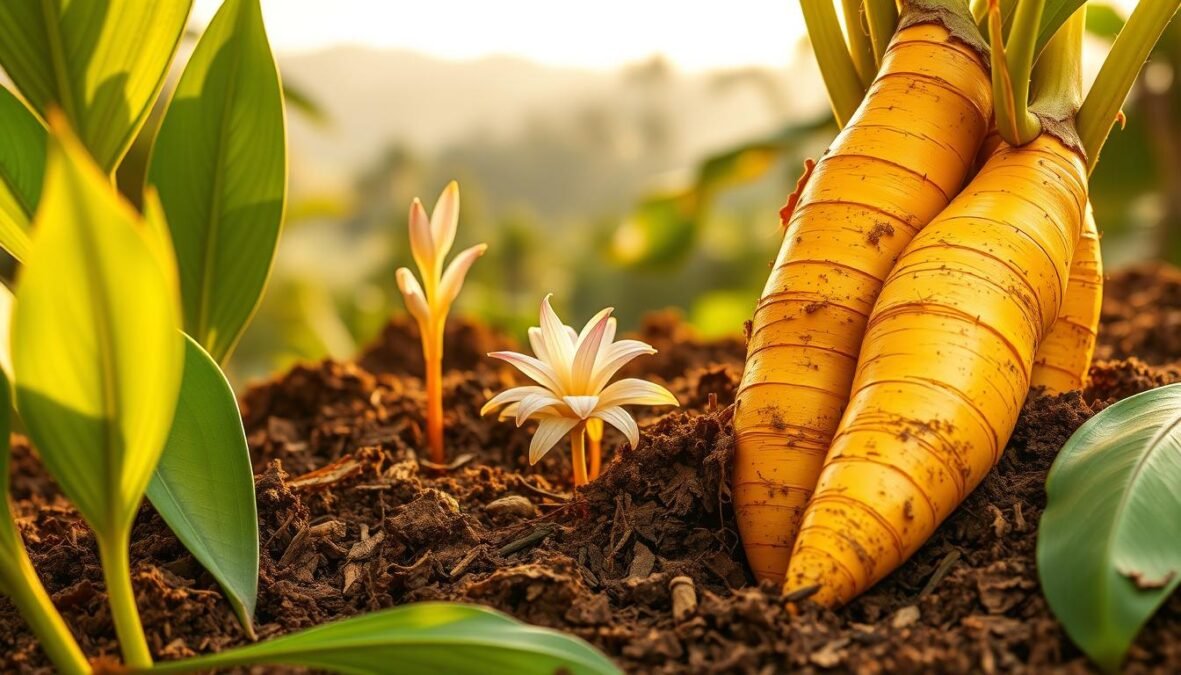
We start by looking at where Curcuma longa fits in the plant world. This helps us understand its role in science and trade. Knowing its place in taxonomy is key for labeling, research, and quality checks.
Family placement and genus Curcuma
Curcuma longa is part of the Zingiberaceae family. This family also includes ginger. Both have similar chemical makeup, which affects their health benefits.
Curcuma longa within related Curcuma species
The Curcuma genus has over 100 species worldwide. Some are used in cooking or medicine, like Curcuma xanthorrhiza. Knowing Curcuma longa from its relatives is crucial for research and health claims.
Accepted scientific names, synonyms, and nomenclatural history
Over time, Curcuma longa has been known by many names. Curcuma domestica is often used as a synonym. Names like curcuma and haldi show the diversity in naming across Asia.
Using the right names is important for research and trade. It helps avoid confusion and ensures safety and quality.
Morphology and Plant Description
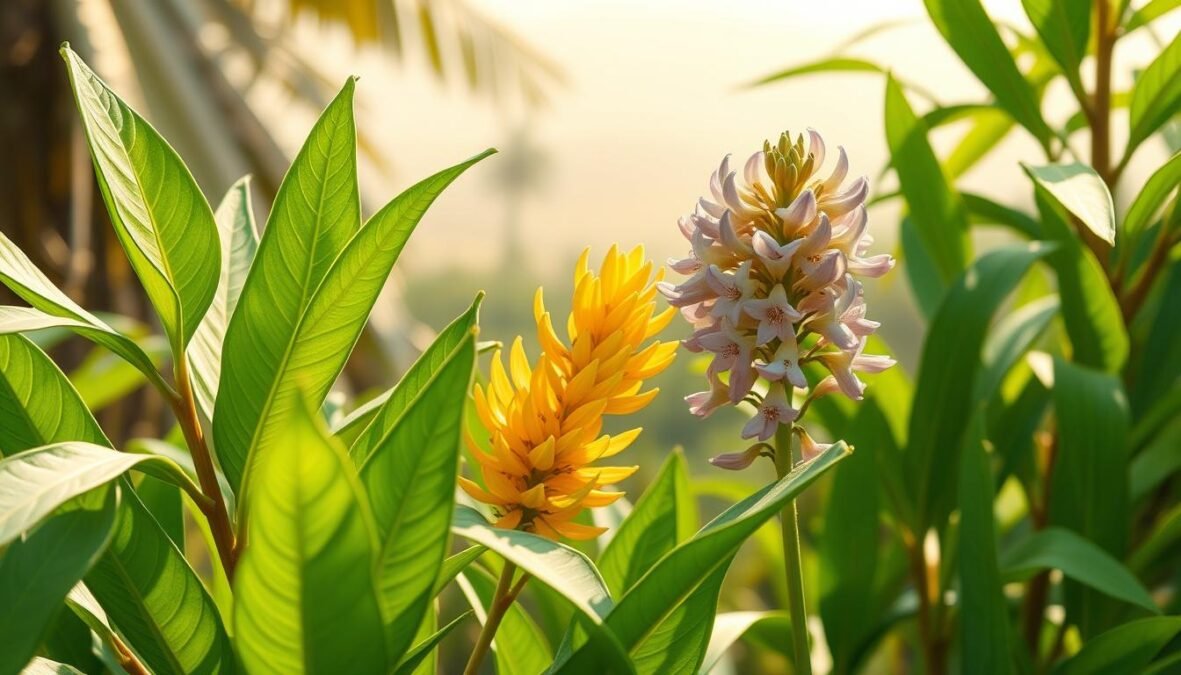
We describe the plant to give a clear sense of form and function. The habit, leaves, and flowers each tell part of the story. Rhizomes beneath the soil supply the energy that drives growth and yield.
Growth habit: herbaceous perennial and rhizomatous structure
The species grows as an herbaceous perennial, reaching about one meter in height. Stems are short. The visible part forms from tightly wrapped leaf sheaths that create a pseudostem.
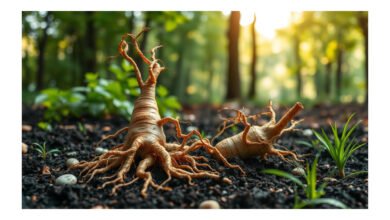
Rhizomes develop below the foliage; they are tuberous, segmented, and form the primary storage organs. A central mother rhizome produces multiple cylindrical secondary rhizomes that branch horizontally and vertically.
Vegetative organs: leaves, stems, and rhizome anatomy
Leaves are long, oblong, and grasslike with a prominent midrib. Each leaf arises from a sheath that contributes to the pseudostem. This arrangement conserves space while supporting large leaf blades for photosynthesis.
The main rhizome often measures 2.5–7.0 cm in length with secondary branches around 2.5 cm in diameter in many cultivars. External color ranges from yellowish-brown to dull brown; the interior shows a bright orange to deep yellow when cut.
Rhizome tissues contain abundant starch and pigments. During processing, those starches gelatinize, changing both texture and color. These traits matter for culinary use and storage.
Reproductive structures: inflorescence and floral morphology
Inflorescences arise directly from the rhizome, often before or concurrent with leaf emergence. Bracts form a compact spike that bears greenish-yellow flowers in succession.
Flowers show diagnostic features used in botanical keys, though most commercial selections prioritize rhizome quality over floral display. For identification, botanists consult detailed floral descriptions in monographs and spice floras.
We note that an understanding of vegetative and reproductive traits supports cultivation choices, postharvest handling, and even how gardeners select plants for kitchen gardens. Practical uses of turmeric and turmeric recipes benefit from knowing which varieties produce the most robust rhizomes for cooking and preservation.
Rhizome Anatomy and Processing Characteristics
We look at the structure and handling of this botanical material. This helps us understand how raw roots become dried rhizomes and powder. We cover size, form, postharvest steps, and traits that affect quality.
Primary and secondary rhizome morphology and dimensions
Primary rhizomes are egg-shaped or tapered. They are about 2.5–7.0 cm long and 2.5 cm wide. Many smaller tubers branch off, creating a segmented system for storing nutrients.
Secondary and tertiary tubers grow laterally and vary in size. Their segmentation makes the rhizome easy to break into pieces. Fresh rhizomes have a firm texture and a pale yellow-to-orange interior when cut.
Postharvest handling: boiling/steaming, drying targets, and polishing
Boiling or steaming is the first step to remove raw odor and gelatinize starches. Traditional methods use shallow pans or large iron vats. Slightly alkaline water, with about 0.05–0.1% sodium bicarbonate, is used in large-scale processing to aid color and shorten cooking time.
Typical boiling times in India are near 40–45 minutes. Some regions cook for several hours for certain varieties. After boiling, immediate sun drying is used to reach a moisture level of about 8–10% (wet basis). Dryness can be checked by a metallic sound when tapped with a finger.
Once dry, rhizomes are polished to remove the rough surface and improve appearance. Historic methods used lead chromate for color, but this is now discouraged due to safety concerns. Modern methods use mechanical polishing and strict quality controls.
Physical and organoleptic properties of dried rhizomes and powder
Dried rhizomes ground to powder have a bright yellow-orange color. Curcuminoid pigments drive the color, while volatile oils and turmerone sesquiterpenes provide aroma. Typical volatile oil content is about 2–5% in many lots.
Organoleptic notes range from bitter and green to medicinal, minty, musty, and woody. Powder color remains stable if kept from sunlight, though flavor and volatile intensity lessen over time. Storage in opaque, airtight containers slows degradation and preserves useful attributes.
We are aware that people exploring supplements or culinary use may seek guidance on turmeric dosage and want to know about turmeric side effects. Processing quality affects extract potency and the way constituents behave in products you buy.
| Attribute | Typical Range / Description | Quality Note |
|---|---|---|
| Primary rhizome size | 2.5–7.0 cm length; ~2.5 cm diameter | Uniform size eases grading and drying |
| Secondary tubers | Variable small tubers; segmented appearance | Affects milling yield and powder uniformity |
| Cooking method | Boiling/steaming; 40–45 min common; up to hours regionally | Controls color, aroma, and starch gelatinization |
| Alkalinity during cooking | 0.05–0.1% sodium bicarbonate in water | Enhances color; must be monitored for consistency |
| Target moisture after drying | 8–10% (wet basis) | Prevents mold and preserves volatile oils |
| Volatile oil content | Approximately 2–5% | Major influence on aroma and functional profile |
| Color of powder | Bright yellow-orange from curcuminoids | Stable if protected from sunlight and heat |
| Organoleptic profile | Bitter, green, medicinal, minty, musty, woody | Affects culinary acceptance and sensory grading |
| Polishing practice | Mechanical polishing; avoid toxic colorants | Safety and market acceptance considerations |
Geographic Origin and Native Range
Turmeric comes from the warm, tropical lowlands of South Asia. It was first used about four thousand years ago. This long history influenced local foods and turmeric’s many uses in rituals and crafts.
Trade routes helped turmeric spread. It reached China by 700 AD, East Africa by 800 AD, and West Africa by 1200 AD. Marco Polo mentioned it in 1280 AD. Jamaica got turmeric in the 18th century, spreading its use in the Caribbean.
Climatic needs
Turmeric grows best in temperatures between 20°C and 30°C. It needs plenty of rain. It thrives in warm, moist, tropical lowlands with steady rain.
Implications for cultivation
Outside its native range, turmeric needs careful cultivation. Growers use irrigation and manage temperatures. These efforts affect the quality and flavor of turmeric, shaping local recipes.
South Asian origins and historical spread to other regions
Turmeric started in India and nearby. It spread through trade and migration. Merchants and sailors carried it, introducing new uses in food and beyond.
Climatic requirements and native habitat characteristics
Turmeric likes deep, fertile soil with good drainage. It needs steady moisture. Native areas get over 1,200 mm of rain yearly. This supports high yields and the compounds that give turmeric its color and smell.
Global Cultivation and Production Patterns
We follow the journey of turmeric from farms to markets. This affects its availability for cooking and commercial use. India leads in production and use, with China, Myanmar, Bangladesh, Nigeria, and Pakistan contributing smaller amounts. The availability of whole turmeric and products like turmeric supplement and turmeric capsules varies by region.
Major producing countries and regional cultivation centers
India grows almost all turmeric and uses about 80% itself. Key areas for turmeric farming are Tamil Nadu, Maharashtra, Andhra Pradesh, and Karnataka. China and Myanmar also grow turmeric for both local markets and exports. Bangladesh and parts of West Africa have smaller commercial farms.
In India, Erode in Tamil Nadu is known as the “Yellow City” for its turmeric trade. Sangli in Maharashtra is another major center for cultivation, grading, and auctioning. These places set quality standards for turmeric products like supplements and capsules.
Crop cycle, planting methods, and yields
Growers plant turmeric using pieces of last year’s rhizome. They plant in warm, moist soil using local varieties. Fields are replanted every year from the previous harvest.
Yields depend on the variety, soil, water, and pest control. People in some areas eat about 200 to 1,000 mg of turmeric daily. This demand drives the need for both fresh turmeric and processed products like supplements and capsules.
Processing hubs and trade concentrations
Primary processing like boiling, drying, and polishing happens near farms. Erode and Sangli have many small mills and traders. They sort, grade, and pack turmeric for local markets and exports. These centers also supply makers of standardized extracts for supplements.
Having a few main hubs makes grading and logistics more efficient. But it also means more risk from weather, disease, or trade issues. Knowing these patterns helps us see how stable the turmeric supply is for products like supplements and capsules.
Ecology and Agronomy of the Plant
We provide growing tips and field practices for this botanical material. This helps you understand how to grow strong rhizomes. We cover soil, climate, pests, harvest timing, and simple reseeding methods used in tropical and subtropical zones.
Soil, temperature, and rainfall requirements for optimal growth
Turmeric grows best in moist, well-drained soils rich in organic matter. Soils like loamy or silty loam with good structure help rhizomes grow big and prevent waterlogging.
It prefers daytime temperatures between 20–30°C and nighttime temperatures above 15°C during growth. Cool weather slows down growth and makes rhizomes smaller.
It needs a lot of rainfall or reliable irrigation during growth. Farmers water it when the tubers are expanding. This keeps the soil moist but not too wet.
Pest and disease considerations relevant to cultivation
Cultivation faces pests and diseases common in tropical tubers. Nematodes, stem borers, and shoot flies can harm the plant if not controlled.
Fungal and bacterial rot can damage rhizomes, mainly in wet or unsanitary conditions. Keeping the area clean during harvest and processing helps prevent spread and keeps quality high.
Integrated pest management is key — use crop rotation, healthy seeds, timely cleaning, and targeted controls. Local extension services offer specific steps for local pests.
Harvesting timing and reseeding practices from rhizomes
Plants grow to about 1 m tall and are harvested when foliage turns yellow and rhizomes are fully grown. Harvesting at the right time ensures the best growth.
Producers save healthy, disease-free rhizome pieces for the next season. They choose seed rhizomes based on size, weight, and health to keep the field disease-free.
After harvesting, start with gentle lifting, cleaning, and curing to reduce damage and rot risk. Proper seed selection and cold-free storage keep them viable for planting.
| Factor | Optimal Range/Practice | Practical Note |
|---|---|---|
| Soil type | Loamy to silty loam, rich in organic matter | Amend with compost to improve structure and fertility |
| Temperature | 20–30°C daytime; >15°C nighttime | Shade or mulching moderates soil temperature in hot climates |
| Water | Consistent moisture; avoid waterlogging | Irrigate during bulking if rainfall is insufficient |
| Pests & Diseases | Nematodes, borers, fungal/bacterial rots | Use IPM and clean seed rhizomes to reduce losses |
| Plant size & cycle | ≈1 m height; annual harvest | Harvest when foliage yellows and rhizomes are mature |
| Reseeding | Use healthy setts from previous crop | Select large, unblemished pieces for best establishment |
| Quality links to uses | Clean processing preserves color and aroma | High-quality rhizomes support culinary uses of turmeric and research into turmeric health benefits |
We encourage growers and practitioners to consider agronomy in their value-chain choices. Paying attention to soil health, pest control, and seed rhizome selection protects yields. It also supports turmeric’s many uses and preserves traits for turmeric health benefits.
Phytochemistry: Major Classes of Constituents
We give a quick look at the plant’s chemical makeup. We focus on the main types of compounds scientists study and report. With over 100 compounds found, it’s key to understand each one well.
Curcuminoids
Curcuminoids are the main pigments scientists look at. They include curcumin, demethoxycurcumin, and 5′-methoxycurcumin. These are usually found in turmeric at about 5–6.6%.
Researchers also find dihydrocurcumin in processed extracts. It’s a reduced form of curcumin.
Volatile oils and sesquiterpenes
The volatile part, about 2–5% of dried rhizome, affects aroma and flavor. Turmerone, ar‑turmerone, and others are key. Germacrone, curcumenone, and curcumenol also play a role.
Other constituents
Nonvolatile parts include polysaccharides and sterols. There are also fatty acids and cholesterol derivatives. Alpha‑linolenic acid is present, making up about 2.5% of lipids.
The rhizome is rich in nutrients like carbohydrates, fiber, and potassium. It also has iron and vitamin C, making it good for our diet.
Changes in curcuminoids and oils come from many factors. These include the plant, soil, climate, and how it’s processed. This is why it’s important to know the chemical makeup when talking about turmeric.
Analytical Methods and Standardization of the Botanical Material
We explain how to ensure consistent, safe material when working with the species. This is important for research or product manufacturing. Clear analytical methods make studies reproducible and help manufacturers meet regulatory expectations. This guide covers key quantification tools, routine quality criteria, and common quality issues with suggested best practices.
Quantification techniques for active constituents
Curcuminoid levels are measured by high-performance liquid chromatography (HPLC). Labs use validated HPLC methods to report curcumin, demethoxycurcumin, and bisdemethoxycurcumin as percent of dry weight. Volatile oils and sesquiterpenes are profiled by gas chromatography (GC) and GC–MS for compositional fingerprinting.
Why accurate quantification matters
Accurate measurements support reproducible in vitro, animal, and human work. They inform dose selection for a turmeric supplement and allow comparison across studies. We recommend validated reference standards and routine method verification to reduce analytical drift.
Moisture, extraneous matter, and microbial criteria
Typical quality specifications include moisture targets around 8–10% wet basis for dried rhizomes, extraneous matter below 0.5% by weight, and mould counts kept under commonly cited thresholds. Manufacturing follows good manufacturing practice and relevant monographs to set microbial limits and contaminant testing panels.
Routine testing panel
- Curcuminoid content by HPLC
- Volatile oil profile by GC or GC–MS
- Moisture and ash content
- Extraneous matter and foreign matter tests
- Microbial enumeration and pathogen screens
- Heavy metals and pesticide residues
Quality issues and historical adulteration
Adulteration and coloring agents have been documented historically—lead chromate was sometimes used to enhance color and polish. These practices pose safety risks and distort analyses. We advise routine heavy metal screening and visual plus instrumental authenticity checks.
Best practices for reliable material
Proven control measures include sourcing traceable raw material, end-to-end processing records, avoiding hazardous finishing agents, and using multilayered testing. Combining HPLC and GC fingerprints with basic compositional checks creates robust quality assurance for a turmeric supplement and for studies of the species.
Traditional and Historical Context in South Asia and Beyond
This plant has been a part of South Asian life for thousands of years. It’s mentioned in ancient texts like Vedic hymns and Sanskrit classics. Names like haridra, haldi, and manjal show its importance.
Ancient books like Sushruta Samhita talk about its uses. They show it was valued in Ayurvedic and Unani medicine. These texts also highlight how people used and stored it.
Trade routes spread the plant far and wide. Merchants and travelers like Marco Polo valued it as a saffron substitute. It was known for its bright yellow color, earning names like terra merita and Indian saffron.
Its color and smell played big roles in culture and religion. In Hindu ceremonies, turmeric marks blessings and prepares skin for weddings. It’s also used in marriage rituals.
It was also used in cooking and crafts. Turmeric was in many dishes, pickles, and preserves. As it traveled to places like China, Africa, and the Caribbean, new recipes emerged.
Trade shaped how turmeric was named and sold. Merchants traded dried rhizomes and powders. This affected its quality and price.
Records show demand for its color and flavor led to more uses. This included savory and preserved foods.
We see these traditions as living practices that still shape our world today. They show how history influences our love for turmeric’s color and uses in cooking and culture.
Culinary and Non-medicinal Uses Documented Historically
Turmeric has been a part of kitchens, workshops, and ceremonies for centuries. It’s used in everyday meals and in special rituals. Its bright color and warm smell made it a key ingredient in many cultures.
In traditional cooking, turmeric is a base for curry powders and rice dishes. Home cooks and chefs mix it with spices like cumin and coriander. This creates a flavorful base for stews and vegetables.
Today, turmeric is used in many foods because of its stable yellow color. You can find it in cheeses, yogurts, and baked goods. It was also used as a cheaper alternative to saffron in cooking.
For centuries, turmeric was used to dye fabrics. Artisans used it to color cotton and silk for robes and household items. Buddhist robes and other ritual textiles also used turmeric for its distinctive color.
People have used turmeric in beauty treatments and rituals. It’s mixed with oils and milk to brighten the skin. Recipes for these treatments vary by region and tradition.
Commercially, turmeric is used in many products. It’s in spice blends and color-stable foods sold worldwide. In some parts of Asia, people eat turmeric every day as part of their meals.
Turmeric capsules are now available for those who prefer a convenient form. While many use the powdered root in cooking, capsules offer a consistent dose.
Try adding turmeric to your meals for a burst of flavor. A pinch in eggs or a stir in rice can enhance your dishes. This way, you get the full taste and color of turmeric, unlike processed foods.
Here’s a quick look at how turmeric is used in different ways at home and in industry.
| Use | Typical Application | Common Form |
|---|---|---|
| Spice and flavoring | Curries, rice, pickles, mustards | Ground powder |
| Food coloring | Cheese, baked goods, beverages, dairy | Extracts, powdered spice |
| Textile dyeing | Ceremonial robes, traditional fabrics | Fresh or dried rhizome preparations |
| Ceremonial and cosmetic | Bridal pastes, ritual anointing, skin brightening | Paste blends with oil or milk |
| Convenience form | Consumer supplements and retail | Turmeric capsules, standardized extracts |
In Vitro Research Approaches and Laboratory Findings
We look at how scientists study the plant in the lab. They use in vitro methods to understand it at a small scale. This helps guide studies on animals and humans.
Cell culture systems are often used. For example, HL-60 and renal epithelial cells are common. Microbial assays test how well the plant fights bacteria and mutagenicity.
Representative endpoints and assays
Scientists measure things like antioxidants and enzyme activity. They also look at cytokine levels and mutagenicity. Microbial tests check how well the plant stops pathogens.
Examples from the literature
Studies show turmeric can reduce TNF-α and PGE2 in cells. Antioxidant tests show activity at around 100 μg/mL. Antimicrobial tests show it works against Vibrio parahaemolyticus and Helicobacter pylori.
Interpretive context
These findings suggest how turmeric might work in the body. But, lab results need careful interpretation. Method details are key to comparing studies and understanding real-world benefits.
Animal Study Designs and Translational Considerations
We look at common ways scientists test this botanical material in animals. We also talk about the challenges they face when they want to use the results in humans.
Animal studies have different goals. Rodents are often used for safety and understanding how things work. Larger animals are used for studies on how the body absorbs and breaks down substances.
Typical animal models and dosing regimens used in preclinical work
- Rodent models: mice and rats for short-term efficacy and subacute toxicity; dosing often expressed in mg/kg and scaled from human-equivalent doses.
- Non-rodent species: rabbits or dogs for specific safety endpoints or formulation tolerability when rodent data are insufficient.
- Dose selection: single ascending doses and repeat-dosing schedules; choice depends on extract type — whole rhizome powder, standardized curcuminoid-enriched extract, or a topical formulation.
- Administration routes: oral gavage for systemic exposure, intraperitoneal for mechanistic assays, and dermal for topical evaluations of a turmeric supplement.
Pharmacokinetic and bioavailability methods in animal studies
- Sample collection: timely plasma and tissue sampling to capture peak and elimination phases; serial sampling in rats or composite sampling in mice.
- Analytical techniques: HPLC and LC–MS/MS to quantify curcuminoids and metabolites; methods must report limits of detection and recovery.
- Formulation effects: nanoparticles, phospholipid complexes, and piperine co-administration dramatically alter plasma profiles — study interpretation must account for these variables.
- PK endpoints: Cmax, Tmax, AUC, and clearance are typical outputs used to guide human dose selection and to compare bioavailability across preparations.
Limitations and considerations when extrapolating from animal data
- Metabolic differences: species-specific enzyme activity alters curcuminoid biotransformation — rodents often metabolize differently than humans.
- Material characterization: variability in extract composition and volatile oil content complicates comparisons; well-characterized lots reduce uncertainty when evaluating turmeric side effects.
- Dose scaling pitfalls: simple mg/kg scaling can mislead; allometric methods and PK-guided approaches give more reliable translational estimates.
- Endpoint relevance: surrogate markers in animals may not predict clinical outcomes; selection of translational biomarkers improves relevance.
We suggest being open about the details of the study. Share the exact makeup of the extract, the methods used to analyze it, and the reasons behind the dosing. This openness helps doctors and regulators understand how animal studies can guide safe use of turmeric supplements. It also helps them keep an eye out for any potential side effects.
| Study Aspect | Common Practice | Translational Note |
|---|---|---|
| Model species | Mice, rats, occasional rabbit or dog | Choose species with relevant metabolism; justify choice for human relevance |
| Dose expression | mg/kg with single and repeat dosing | Use PK to inform human-equivalent dosing rather than simple scaling |
| Formulation variables | Crude powder, standardized extracts, enhanced formulations | Report composition — curcuminoid and volatile oil profiles are essential for comparisons |
| Analytical methods | HPLC, LC–MS/MS for curcuminoids and metabolites | Provide validation metrics and limits to support PK interpretations |
| Safety signals | Clinical chemistry, histopathology, behavioral observations | Relate findings to doses and exposure to anticipate possible turmeric side effects |
| Data reporting | Detailed methods, raw PK curves, extract batch data | Facilitates replication and better assessment of this botanical material across studies |
Human Research Methodology and Clinical Study Notes
We look into how studies on humans have been set up and shared. We focus on the practical issues that affect how we understand them. Clinical studies vary a lot, from randomized trials to open-label and observational ones. It’s important to know the methods and how they are reported to judge the benefits of turmeric.
Design types reported in the literature
Randomized, controlled trials are the top choice for testing interventions. Open-label trials give us data on how things work in real life. Cohort and case-control studies help find links and safety issues when random trials aren’t possible.
Endpoints, standardization of material, and reporting practices
It’s crucial to define outcomes clearly. Using objective measures and validated scales helps reduce bias. Studies need to share details about the turmeric used, like the percentage of curcuminoids and how it’s extracted. They also need to tell us about the dosage, how long it was taken, and any other treatments used.
Data heterogeneity and challenges in study comparisons
Different turmeric products and how they are delivered can make studies hard to compare. The choice of outcomes and how long studies last also adds to the challenge. Being open about how data is analyzed and following reporting guidelines helps make comparisons easier.
| Study Feature | Common Variants | Impact on Interpretation |
|---|---|---|
| Design | Randomized controlled trial; open-label; cohort | Determines strength of causal inference and susceptibility to bias |
| Botanical specification | Whole rhizome powder; standardized extract (curcuminoid %); enhanced-bioavailability formulations | Affects dose equivalence and limits cross-study aggregation |
| Dosing and regimen | Fixed daily dose; weight-adjusted dosing; single vs divided doses | Alters pharmacokinetic exposure and potential clinical effects |
| Endpoints | Biomarkers, symptom scales, physical function | Choice drives clinical relevance and comparability across trials |
| Analytical reporting | Full HPLC/GC profiles; total curcuminoids only; absent data | Quality of chemical characterization determines confidence in results |
| Concomitant therapies | Placebo control; active comparator; permitted background meds | Can confound attribution of turmeric health benefits to the intervention |
Safety Observations and Toxicology Findings
We look at the safety and toxicity of this botanical material. We focus on animal studies, human trials, and what the rules say. Our goal is to help you understand the data without getting too caught up in it.
Toxicological profiling in preclinical and clinical settings
Animal studies test turmeric extracts and curcuminoids at different doses. These doses range from very low to very high. The studies check for organ damage, blood work, and reproductive health.
In human studies, safety depends on the type of turmeric, how it’s made, and the dose. The way turmeric is made to be absorbed better can change how it affects the body.
Reported adverse events, dose ranges used in studies, and monitoring
Most side effects in people are stomach-related. These include mild nausea, upset stomach, and loose stools. Rarely, some people might see their liver enzymes go up.
There’s a worry about bleeding and how turmeric might interact with blood thinners. It’s important to check with your doctor if you’re taking these drugs and using turmeric capsules.
Regulatory monographs and documented safety guidance
Regulatory bodies and quality standards focus on what’s in the material and where it comes from. They check for contaminants and make sure it’s safe. This is because some turmeric has been tainted in the past.
Guidelines ask for clear reports on side effects and how much is in the product. They also want labels to show how strong the extract is. This helps keep the turmeric safe and free from harmful things.
- Preclinical data: dose-dependent effects, margin-of-safety calculations, common endpoints used in studies
- Clinical monitoring: GI symptoms, liver panel checks, bleeding risk assessment, and drug interaction vigilance
- Quality controls: heavy metal screening, microbial limits, and avoidance of unsafe processing aids
Research Gaps and Methodological Recommendations
There are clear gaps in our understanding of the plant and its benefits. Studies differ in how they describe, process, and report the material. This makes it hard to compare and understand the benefits of turmeric supplements and health benefits.
Standardization needs for botanical material and extract characterization
We suggest using authenticated voucher specimens and identifying cultivars in every study. Each batch should have a certificate of analysis. It should list curcuminoid content, volatile oil profile, moisture, and limits for extraneous matter.
Use validated methods like HPLC for curcuminoids and GC or GC–MS for volatiles. This ensures results are comparable across labs.
Recommended study designs to improve reproducibility and clarity
Randomized, blinded protocols are key in human trials. Preclinical work should report exact formulations, excipients, and dosing vehicle. Pharmacokinetic sampling schedules and bioanalytical validation should be specified.
This allows others to reproduce exposure measurements that support turmeric health benefits claims.
Priority areas for phytochemical and pharmacokinetic research
We focus on detailed sesquiterpene mapping across cultivars and growth locations. Stability studies of dried powders and extracts are crucial. They inform shelf-life and processing decisions.
Comparative bioavailability trials should link standardized preparations to systemic exposure in animals and humans. This will help understand turmeric supplement quality and potential health benefits.
To improve evidence quality, we urge routine deposition of raw chromatograms and analytical parameters with publications. Clear reporting standards will help clinicians and consumers understand study outcomes on turmeric supplements and potential health benefits.
Conclusion
We’ve looked at Curcuma longa, its place in the Zingiberaceae family, and its rhizome anatomy. We’ve also covered its chemical makeup and how it’s used in labs and kitchens. This knowledge helps us understand turmeric’s benefits and uses.
Studies on turmeric have been done in labs, on animals, and on humans. But, different methods make it hard to compare results. To get reliable results, it’s key to use the right materials, methods, and report details clearly.
It’s important to avoid harmful additives and check for quality in turmeric products. When trying turmeric recipes or products, look for clear standards and reliable research. This ensures safety and effectiveness.
Turmeric is not just interesting scientifically but also culturally significant. By studying it carefully and using standard methods, we can make its benefits safe and useful for everyone.